
It is difficult to define all the ways that a song introduction can be created as there are simply so many creative ways to start a song. This post is intended as more of a rather simple “idea” list for beginners rather than a comprehensive compilation of all the types of song introductions.
Introduction Definition
An introduction is a passage or section which opens a piece, preceding the theme or lyrics. The introduction typically establishes melodic, harmonic or rhythmic material related to the main body of a piece and thus sets the mood of the following material. The introduction often either leads directly into the piece or pauses on the tonic before starting the main body of the piece.
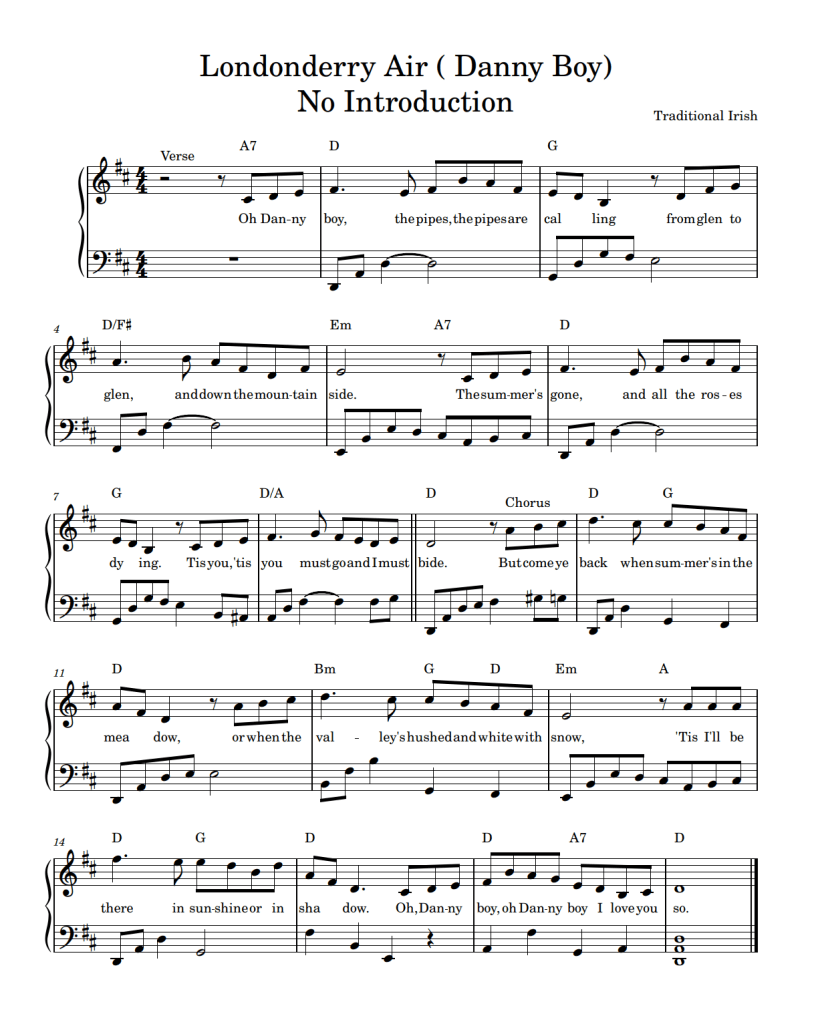
I will be using the song, “Danny Boy” as an example.
The lyrics to “Danny Boy” were written by English lawyer and lyricist Frederic Weatherly in 1910. The iconic music is a traditional Irish melody known as the “Londonderry Air”, which was collected in the mid-19th century by Jane Ross
This version of Danny Boy is in the key of D Major with the form of A (Verse) and B Chorus). You can see the verse starts on the V Chord (A7) and ends with a IV-I cadence (G chord – D chord). The chorus ends with a V-I cadence (A7 chord – D chord).
Ideas for creating song introductions
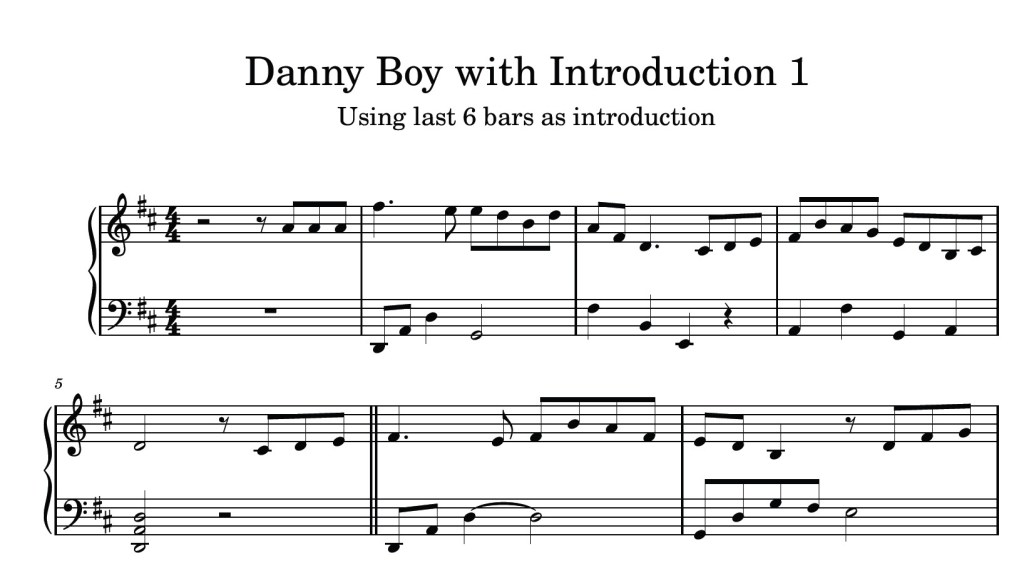
Use some later fragment of the song at the beginning
Repeat an especially distinctive, memorable melodic or rhythmic phrase from somewhere in the song at the beginning.
– Use the last 4 or 8 measures (final phrase) of the song.
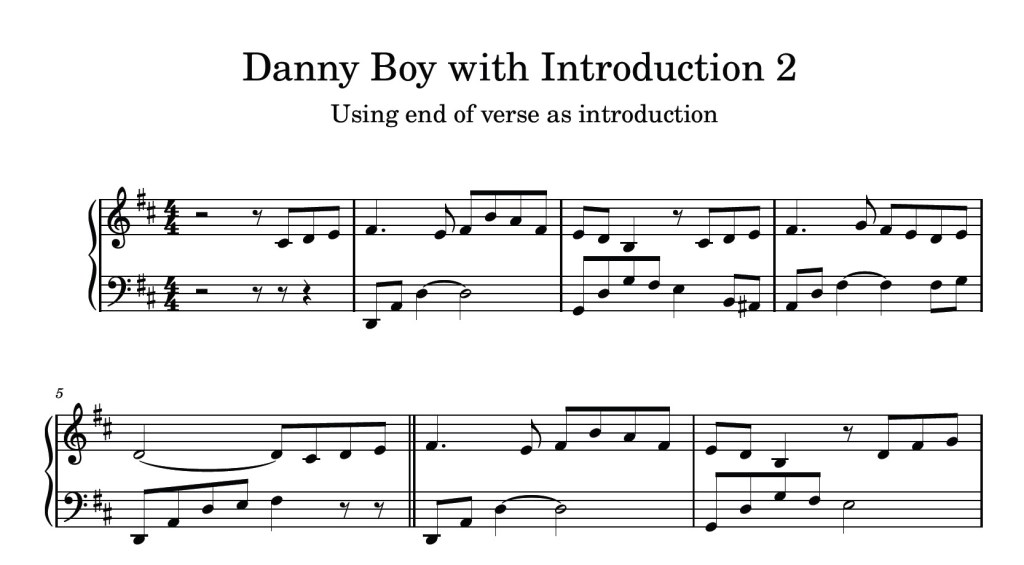
– Use a memorable portion of the song like the end of a chorus or verse or a highlight of the song.
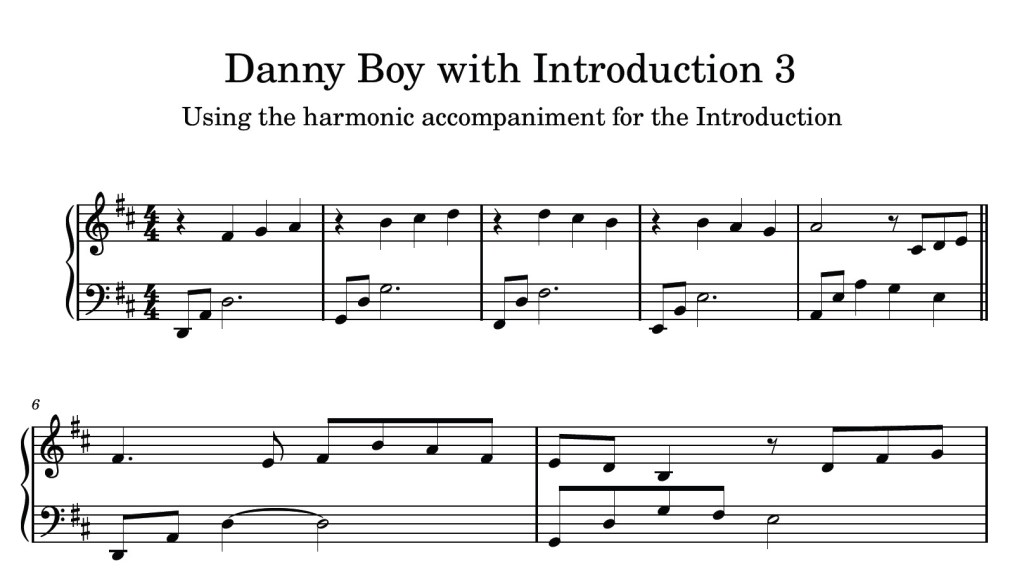
Use the harmonic accompaniment for song
– Play the main Left Hand harmonic pattern by itself that is used in the main piece. In this example, I added a simple Right Hand pattern as filler.
Use particular song characteristics from the song
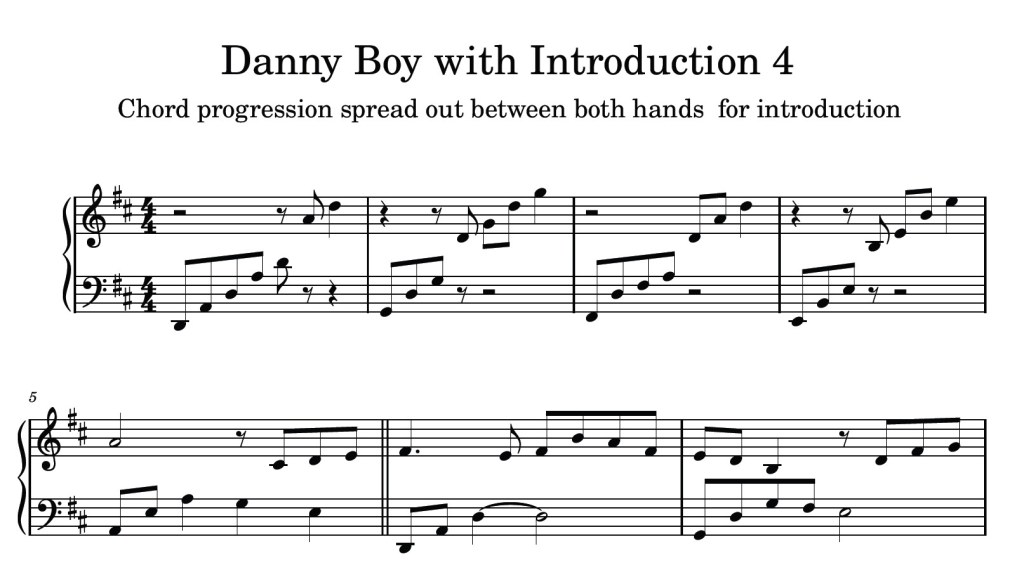
– Pick out the typical chord pattern of about 4 or more chords. Play the chord progression spread out between both hands or otherwise modified by arpeggios, different appropriate rhythms, or improvisation that is similar to the following song.
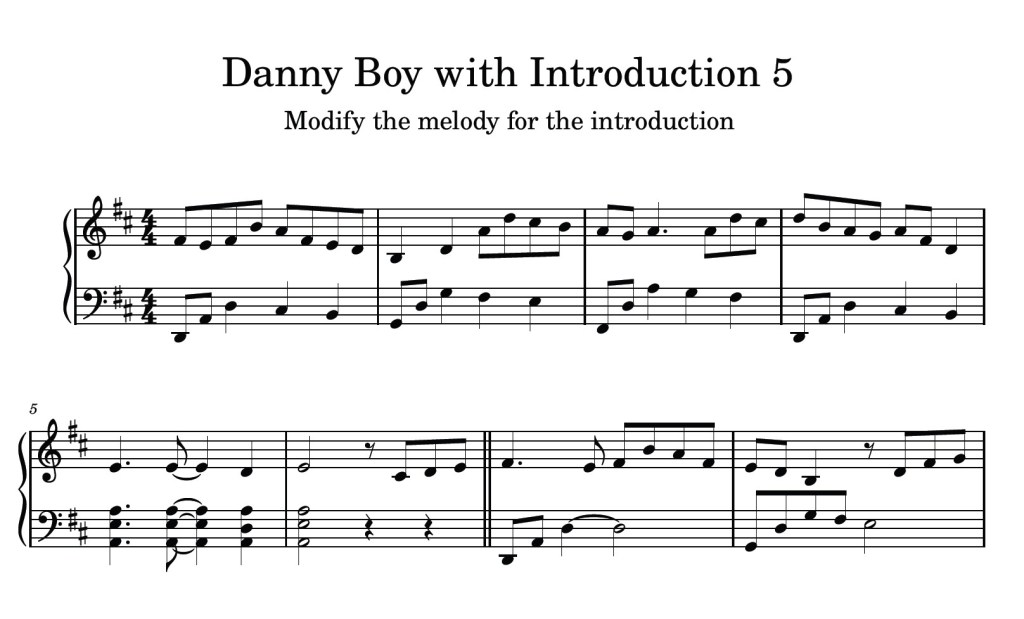
– Pick out a portion of melody and modify it so it is different from when used elsewhere.
Vamp An Intro
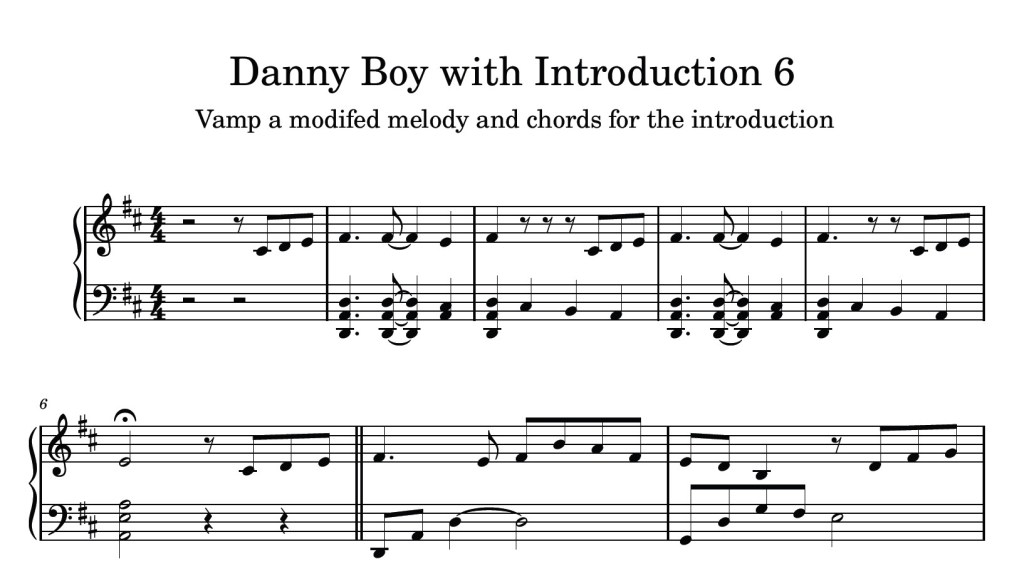
– Pick out a short chord progression or melodic idea, often from the verse, then repeat for a time to set up the “groove. The chord progression can be of any length (1, 2, 4 chords for example), it is simply repeated until the song is ready to start. A fill can be also be added which typically consists of a simple melody or a quick run between notes.
Unrelated Introduction
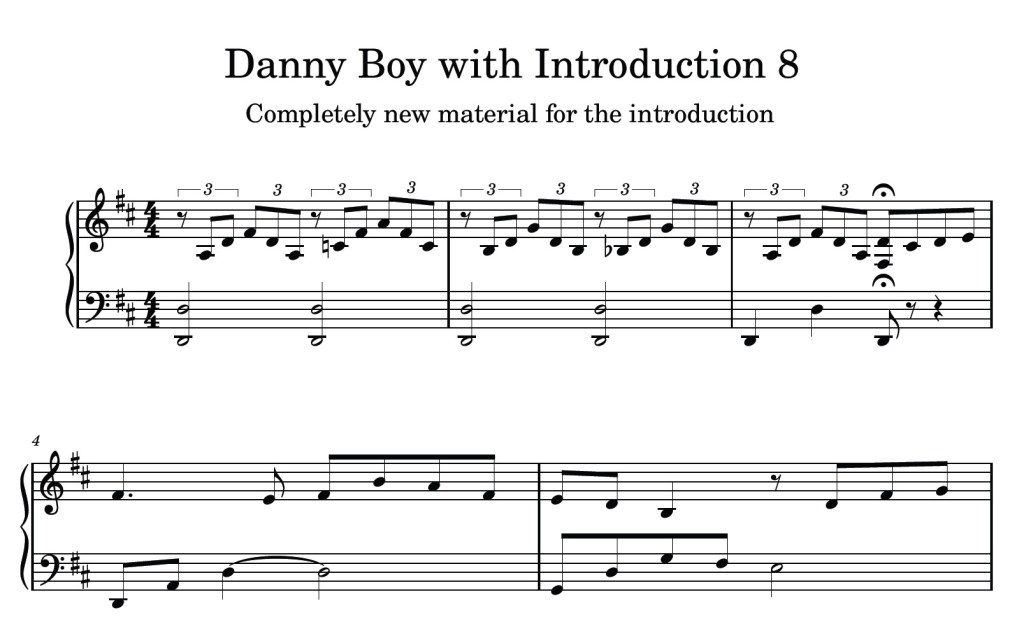
An intro that uses no ideas from the rest of the piece, however it usually is in the same key and time signature.
– Use a side stepping chord sequence (can be chromatic) which ends on the starting chord of the song.
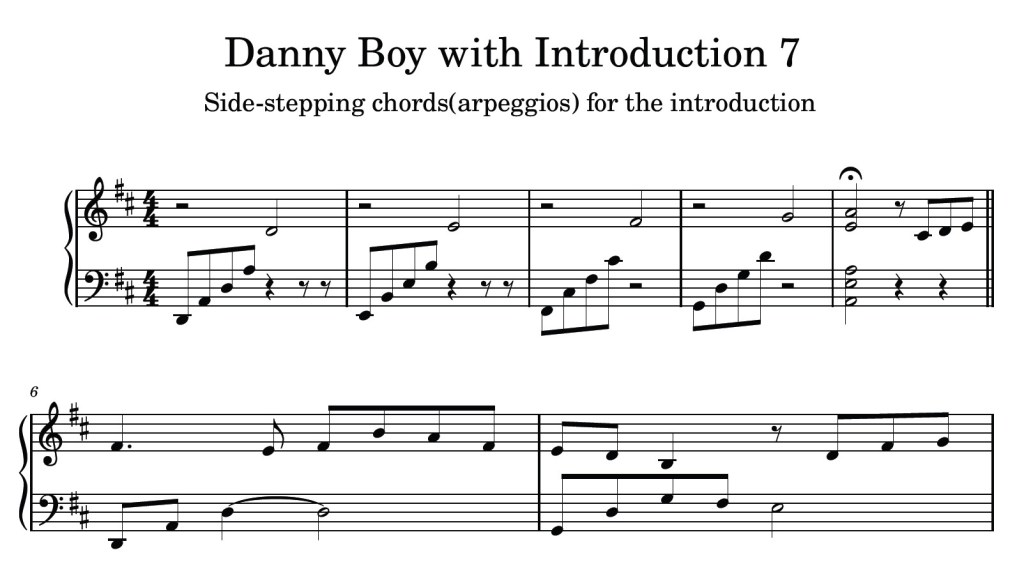
– Make up an introduction that is unrelated to the piece. However, it typically needs to be in the piece’s key and involve chords commonly used in the piece.
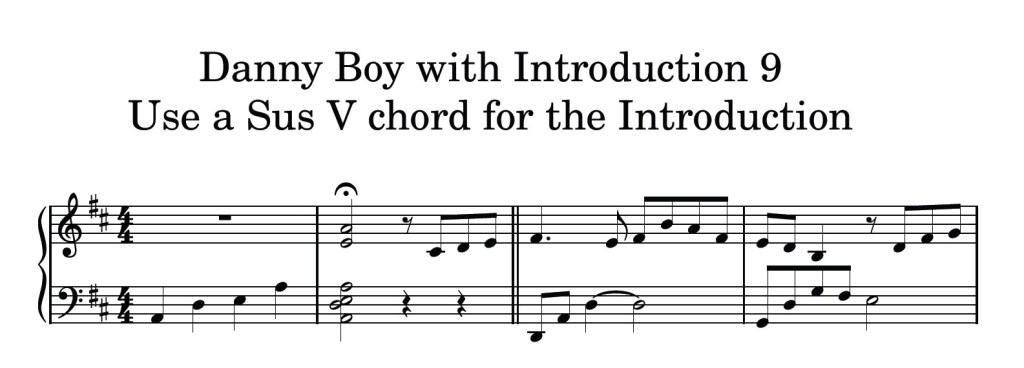
– Use a Sus-chord push for a short introduction where a sus V chord is played or arpeggiated sus chord into the tonic before resolving to the tonic
Final Considerations
Not all the introductions created for this exercise really complimented the song well. So, think about the mood of the song and try different ideas until you find the introduction that seems best.
Usually song introductions end on the tonic (I), but because this song was a little different with the pickup notes, ending the introduction on the dominant (V) often made sense.

