Piano Technique List

“Technique is a chest of tools from which the skilled artisan draws what he needs at the right time for the right purpose.“
– Josef Hofmann

I’ve always found it handy to know specific piano techniques prior to trying to use a particular technique in a piece. Thus, I really like technical exercises that can advance my piano technique in isolation. Of course, you do also have to learn particular techniques for unique issues in pieces, but having frequently used technical skills in already in place makes learning new pieces much easier. Consequently, I urge all my students to practice some technique regularly to build up their own “technique toolbox”. Sometimes, I call this technique practice “warm-ups for playing the piano” and have my students think of technique practice as being like how athletes warm-up their body before doing their regular practice.  I also like to combine technique practice with learning music theory whenever possible.

I’ve struggled in the past with deciding what skills to include in assigned technique practice. I originally started with the same technical skills list that was required for my music exams, but have substantially expanded and also reduced that list over time. I now think this technique list is an ongoing project as I figure out new skills which should be included in the list. Listed below are the current technique skills that I typically include with my lessons:

Beginning Student Technique List

Technique NameResourceComments
Finger Dexterity, Finger Strength, Finger IndependenceSchmitt Op. 16, Nos. 1-10, The Complete Technique Book – Exercise 4iI occasionally modify these exercises to make variations for my teaching book.
Beginning Drop-RollThe Hanon Studies Book 1 – No. 1Introduction to Drop-Roll and wrist flexibility
Beginning ScalesMy Teaching Book – One Octave Scales, Hands SeparateCross-over and under, circle of fifths, key signatures
Two Handed ArpeggiosMy Teaching BookMove around the entire keyboard, learn basic chords, circle of fifths, use of damper pedal
Phrasing, Drop-Roll, Legato, SlursThe Hanon Studies Book 1 – No. 2, 3, 11, 12, 13, 14, 15Also has some staccato included
Various Staccato touchesThe Hanon Studies Book 1 – No. 5, 6, 7, 8Wrist Staccato, portamento, marcato, forearm staccato
Various legato touchesThe Hanon Studies Book 1 – No. 4, 9, 
Rotary motionThe Hanon Studies Book 1 – No. 10, A Dozen A Day Book Two – Group I No. 2, The Complete Piano Technique Book – Example 2k, 2l, 2m, 2n, A Dozen A Day Book 2 – Group II No. 4, A Dozen A Day Book 2 – Group IV No. 5 
Chord Drop-RollPersonal Teaching Book – Chord ScalesDrop-Roll, Pedal, chords available within a key
Legato and Staccato 3rdsA Dozen A Day Book 1 – Group I No. 3, Schmitt Op. 16, Nos. 119-127, A Dozen A Day Book 2 – Group I No. 11, Group IV No. 6Double notes
Finger stretch and independenceA Dozen A Day Book 1 – Group I Nos. 7,8 
Repeated NotesA Dozen A Day Book 1 – Group III No. 4 
1 Octave Scales Hands TogetherThe Complete Book of Scales, Chords, Arpeggios & CadencesCircle of Fifths, key signatures

Intermediate Students Technique List      

Technique NameResourceComments
OrnamentsA Dozen A Day Book 1 – Group III No. 10, My Teaching BookMordent, Appogiatura, Acciaccatura, Turn, Grace Notes
TrillsHanon — The Virtuoso Pianist in 60 Exercises: Complete No. 46, Brahms 51 Exercises – No. 17, My Teaching Book 
Finger DexterityBrahms 51 Exercises – No. 39Good preparation for the Bach Preludes and Fugues
Left Hand JumpsA Dozen A Day Book 1 – Group V No. 2 
Staccato Double 6thsA Dozen A Day Book 1 – Group V No. 5, The Manual of Scales, Broken Chords, and Arpeggios for Piano 
GlissandosA Dozen A Day Book 1 – Group V No. 10 
Poly RhythmsWendy Stevens – Polyrhythm Exercise No. 1, Brahms 51 Exercises – Nos. 1a-1d 
Legato Chromatic ThirdsMy Teaching Book, The Manual of Scales, Broken Chords, and Arpeggios for Piano 
Scales – Two Octave and Four Octave, hands together, ChromaticThe Complete Book of Scales, Chords, Arpeggios & Cadences 
One handed Arpeggios – Hands together, two octaves and four octavesThe Complete Book of Scales, Chords, Arpeggios & Cadences 
CadencesThe Complete Book of Scales, Chords, Arpeggios & Cadences, My Teaching BookInclude Perfect, Plagal, Interrupted, Imperfect Cadences
Double Octaves – staccatoThe Manual of Scales, Broken Chords, and Arpeggios for Piano 
Thumb accents, dynamics practice, hand balance, speed work, one hand staccato – one hand legato, finger strength, dotted rhythms, different articulationsHanon — The Virtuoso Pianist in 60 Exercises: Complete * 
Chromatic, Various Minor ScalesThe Complete Book of Scales, Chords, Arpeggios & Cadences, My Teaching Book 
7th and diminished arpeggios + inversionsThe Complete Book of Scales, Chords, Arpeggios & Cadencesarpeggios
Mode Scales, Blues/Jazz Scale, Whole Note scaleMy Teaching Book 

* Why I love Hanon by Dawn Taylor-May

Favorite Technique Books

The Hanon Studies Book 1 by John Thompson, published by Hal Leonard
The Complete Piano Technique Book by Jennifer Castellano, published by Fundamental Changes, ltd.
Hanon for Two, arranged by Melody Bober, published by Alfred
Schmitt Op. 16 Preparatory Exercises For the Piano, by Aloys Schmitt, published by Schirmer
The Complete Book of Scales, Chords, Arpeggios & Cadences by Willard Palmer, Morton Manus, Amanda Vick Lethco, published by Alfred
The Manual of Scales, Broken Chords, and Arpeggios for Piano, published by ABRSM
Hanon — The Virtuoso Pianist in 60 Exercises: Complete, composed by Charles-Louis Hanon, edited by Allan Small, published by Alfred
A Dozen A Day Books Prep through Book Two, by Edna-Mae Burnam, published by The Willis Music Company
My Teaching Book – I modify or specially arrange exercises for my students
Wendy Stevens Rhythm Worksheets
Brahms 51 Exercises for the Pianoby Johannes Brahms

Non-Exercise Technique Practice

Sometimes students, especially intermediate or advanced students don’t like practicing technique via exercises. In that case, I try to find pieces at the right level that include particular technique skills. I currently use the following books as a resource for practicing technique through pieces:

Tone Touch & Technique for the Young Pianist by Max Cooke, published by EMI Music Publishing
Tone Touch & Technique for the Advanced Pianist by Max Cooke, published by EMI Music Publishing
Technique through Repertoire Book 1, Edited by Christopher Madden and Jani Parsons, published by The Frances Clark Center
Technique through Repertoire Book 2, Edited by Christopher Madden and Jani Parsons, published by The Frances Clark Center
Useful Piano Teaching Quotes

It took me a long time to recognize the value of using quotes with my students when teaching the piano. I’m not good at remembering quotes and used to feel that people who used a lot of quotes were really just trying to be pretentious. However, after having lessons with teachers who valued and used quotes effectively, I finally came around to understanding that quotes can be very efficient mechanisms for expressing ideas and thoughts. Consequently, I started collecting various quotes about music that I deemed valuable for my teaching and made a list of them for my convenience.

Practicing

“Practice very slowly – progress very fast.”
– Stephen Heller

“If practicing feels easy, you’re probably not doing it right.”
– Noa Kageyama

“Practice with your fingers and you need all day. Practice with your mind and you will do as much in 1 1/2 hours.”
– Leopold Auer

“An amateur practices until he can do a thing right, a professional until he can’t do it wrong.”
– Percy C. Buck

“If I don’t practice one day, I know it; two days, the critics know it; three days, the public knows it.”
– Jascha Heifetz

Performing

“The wrong note played with gusto always sounds better than the right note played timidly.” 
-Tommy Jordan

“The piano ain’t got no wrong notes.”
-Thelonious Monk

“To play a wrong note is insignificant; to play without passion is inexcusable.”
– Ludwig van Beethoven

“SAND and sound. Try this experiment. Grab a fistful of sand and squeeze – hard. What happens? The harder you squeeze, the more the sand runs out. There’s a lesson here. Think about sound – and let go.”
– Suzanne W. Guy

“Aim for excellence, not perfection”
– Penny Black

“It seems to me that you don’t dare to express yourself as you feel. Be bolder, let yourself go more. Imagine you’re at the Conservatoire, listening to the most beautiful performance in the world. Make yourself want to hear it, and then you’ll hear yourself playing it right here. Have full confidence in yourself; make yourself want to sing like Rubini, and you’ll succeed in doing so. Forget you’re being listened to, and always listen to yourself. I see that timidity and lack of self-confidence form a kind of armour around you, but through this armour I perceive something else that you don’t always dare to express, and so you deprive us all. When you’re at the piano, I give you full authority to do whatever you want; follow freely the ideal you’ve set for yourself and which you must feel within you; be bold and confident in your own powers and strength, and whatever you say will always be good. It would give me so much pleasure to hear you play with complete abandon that I’d find the shameless confidence of the “vulgaires” unbearable by comparison.”
– Frederick Chopin

Music Teaching

“Move from the known to the unknown”
– B.K.S. Iyengar

“Have the body supple right to the tips of the toes.”
– Frederick Chopin

“We use sounds to make music just as we use words to make a language.”
– Frederick Chopin

“The music is not in the notes, but in the silence in between.”
– Wolfgang Amadeus Mozart

“Simplicity is the highest goal, achievable when you have overcome all difficulties. After one has played a vast quantity of notes and more notes, it is simplicity that emerges as the crowning reward of art.”
– Frederick Chopin

“A long note is stronger, as is also a high note. A dissonant is likewise stronger, and equally so a syncopated note. The ending of a phrase, before a comma, or a stop is always weak. If the melody ascends, one plays crescendo, if it descends, decrescendo. Moreover, notice must be taken of natural accents. For instance, in a bar of two, the first note is strong, the second weak, in a bar of three the first strong and the two others weak. To the smaller parts of the bar the same direction will apply. Such then are the rules: the exceptions are always indicated by the authors themselves.”
– Frederick Chopin

“It is better to deeply understand one field than to be acquainted with ten thousand.”
– Chinese Proverb

“Look at these trees! (Liszt) said, The wind plays in the leaves, stirs up life among them, the tree remains the same, that is Chopinesque rubato”
– Liszt

“Above all, make me forget as I listen to you, that the piano has hammers.”
– Debussy

“Technique represents the material side of art, as money represents the material side of life. By all means achieve a fine technique, but do not dream that you will be artistically happy with this alone… Technique is a chest of tools from which the skilled artisan draws what he needs at the right time for the right purpose. The mere possession of the tools means nothing: it is the instinct – the artistic intuition as to when and how to use the tools – that counts. It is like opening the drawer and finding what one needs at the moment.”
– Josef Hofmann

“PEDALS are for color… fingers are for legato. Hands before Feet.”
– Suzanne W. Guy

“Tell me, I forget; Show me, I remember; Involve me, I understand”
– Carl Orff

“Music is what feelings sound like.”
– Unknown

“Pedal with your ears”
– Unknown

Improvising and Composition

“A good composer does not imitate; he steals.”
– Igor Stravinsky

“Country music is three chords and the truth.”
– Harlan Howard

Miscellaneous

“The sonatas of Mozart are unique; they are too easy for children, and too difficult for artists.”
– Artur Schnabel

MTNA National Conference 2025

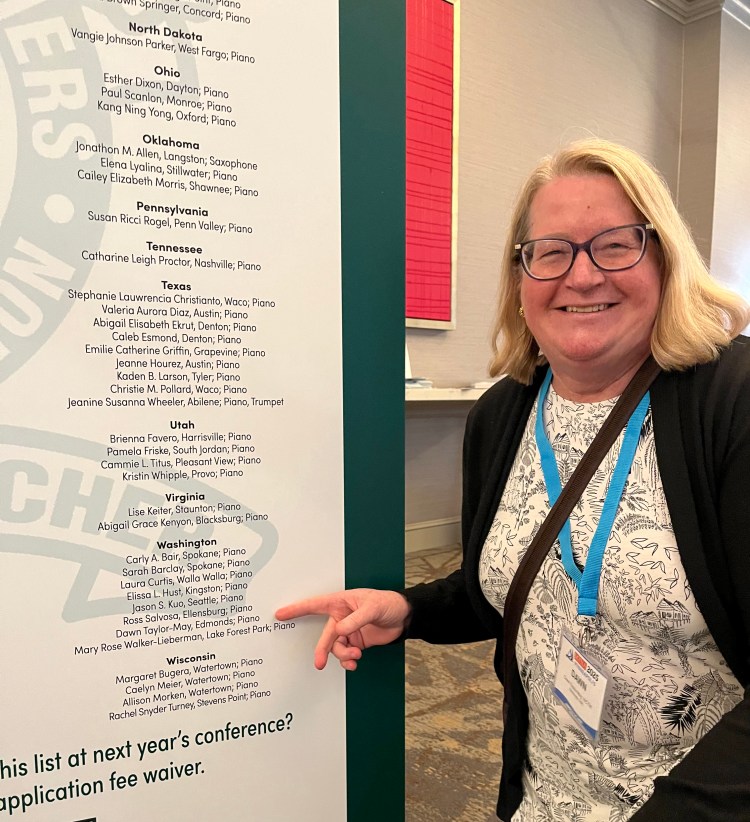
This was my third time going to the National MTNA (Music Teacher National Association) Conference for music teachers. However, it was my first time attending with my NCTM (National Certification for Teaching Music in Piano). Since, I had received my NCTM this year, my name was on the board in the hallway at the conference. Yeah! It was nice to stand up at the NorthWest regional meeting and also at the NCTM reception at the conference to be recognized.

The MTNA Conference is similar to the CES (Consumer Electronics Show) for music teachers. There is “shopping” hall with all the major music publishers, piano manufacturers like Steinway and Yamaha, music teacher technology software, music games, etc. In addition, there are concerts, national competitions for students, and of course many presentations on various aspects of music teaching.

I attended twenty-five presentations at the conference which tends to overwhelm you, so I always try to take notes so I can remember what I saw and heard and hopefully improve my own teaching. My four favorite presentations that I attended from this year’s conference were:

Playing Your Best When It Counts: Strategies to Overcome Performance Anxiety presented by Michelle Wachter, DMA, NCTM

I found this presentation interesting because the presenter talked about her personal journey working through performance anxiety in detail, while recognizing the current science surrounding this topic. She divided the talk into pre-performance strategies, day of performance strategies, and after-performance strategies. I had heard of most of the strategies that she used prior to this talk, but she described in excellent detail how she utilized these strategies. So, it was interesting to hear her exact performance warm-up, her different breathing routines, her detailed visualizations, and her guided meditation that she used on the day of performance. I felt that even though I had tried some of these strategies previously, I didn’t put forth the same level of effort into it that she utilized. Attending this talk helped me understand how to approach some the strategies like visualization in a more concrete way.

Integrating Video Game Music into Piano Repertoire presented by Hannah Viquesney

If I had to live my life over again, taking Hannah Viquesney’s path might be very appealing to me. She is a video game developer and also a music major, which sounds like such a fun life. I attended more than one lecture on video game music, but this was easily the best. I especially liked her great overview of the video game music with many varied examples presented in a tech savvy way. Also, she introduced me to the Materia Collective which helps video game music composers to sell their music and receive the appropriate royalties. It is a very fun site and you can even buy sheet music books from them. It was good to hear that she also used Musescore.org software for transcribing music as I have been using it for years and it is my current favorite for writing music down utilizing a computer. However, I don’t use the latest version, because it is starting to become more commercial. I found it interesting that she also sometimes delves into YouTube for piano arrangement inspiration. As a result of this presentation, I feel that I at least can recognize some of the top video game music creators. It was almost enough to make me wish that I had some younger students that wanted to play this sort of music.

Practice Strategies for Time-Poor Students presented by Samantha Coates

I am very familiar with Samantha Coates as I used a lot of her books when I was taking the Australian Music Education Board (AMEB) exams. She is an extremely dynamic presenter, so it is always great fun to attend her presentations. In this presentation, she talked mostly about three strategies to help super busy piano students find a way to fit in piano practice. Her use of a jelly bean jar to help students understand why they need to practice frequently was genius. However, I need to think a bit about how to utilize a similar strategy with my adult students. Her ideas on interleaved and blocked practice were not new to me, but the way she explained these difficult ideas in a simple and entertaining way was helpful. One new thing I learned was her “Fast-Slow” practice technique. It reminded me of the at-tempo “chaining” technique, but was slightly different, so that was also good to learn. I also totally agreed with her on the “too much” of separate hands practice. I also think playing an entire piece “Right Hand” only is not the most efficient way to practice. It isn’t to say separate hands can’t be useful, but I liked her idea of initially learning 1 line at a time “Hands Together” is a better way to learn a piece than learning the entire piece “Hands Separate” first.

An Insider’s Look into Piano Technique and Movement presented by Mi-Eun Kim, the director of keyboard studies at MIT

I love this presentation because it described leading edge research from MIT on how “elite pianists are able to harness their elastic tissues to be more efficient”. So, in this as yet unpublished research, we were able to get a glimpse into how elite pianists move differently and also how technology can measure with ultrasound how your soft tissues move when playing the piano. I found it absolutely fascinating. Some of my biggest technique “takeaways” from this presentation was that a force plate will measure playing big chords somewhat like internal body jumps. Evidently, your body evidently prepares for that particular movement like it is “jumping”. It was also interesting to realize that elite pianists don’t just move their fingers, they are fully engaged in the music and subsequently utilize organized motions of the many components of the body at the same time to achieve their goal. It was also fascinating to hear that when Mi-Eun Kim got some data about how she was moving in an inefficient way, she fixed the issue by thinking about and analyzing on her own what to do to become more efficient. The Alexander Technique was mentioned during this presentation as some of it’s ideas were realized in the research.

Finally, the concert and advanced master class by the artist, Michelle Cann, was great. I especially liked her second encore after her lengthy and wonderful concert on Tuesday night.

This Is What It Sounds Like – Book Review

I absolutely adore this book by Susan Rogers and Ogi Ogas. I have gifted the book numerous times to various family members and it has helped me to understand “the meaning”, “the how”, “the why”, and “the what” of my musical preferences. That being said, I also struggled a lot with this book because the author’s musical sweet spot was very far from my own and it was often difficult for me to imagine myself in her musical “shoes”. However, I felt this book caused me to question exactly why I liked certain songs more than others and to become more aware of my musical tastes and accept that other people often have very different tastes.

The book is very approachable to the non-music making reader and an easy read even though it often describes the “neuroscience of music”. The use of many stories illustrating the concepts used in the book is quite helpful in this regard. I also appreciated that the author “cut her teeth” as a female record producer working successfully in a male-dominated field of record producers and then became a cognitive neuroscientist. It is an incredible back story and she is obviously an impressive individual.

The book’s organization into chapters is a good guide, so I’ll follow the chapter format for the rest of my comments.

Overture

“The music that delivers the maximum gratification to you is determined by the seven influential dimensions of musical listening: authenticity, realism, novelty, melody, lyrics, rhythm, and timber.” (Rogers, Ogas p.9)

My biggest issue with this book was that I had trouble relating to her seven influential dimensions of musical listening. In particular, I had trouble with the authenticity and realism dimensions. I felt harmony, which was included in the melody category and complexity which was included in the authenticity category needed to be separate categories. As a pianist who is often playing melody and harmony with different hands, having harmony lumped in with the melody category was difficult to accept. In addition, I often listen for and appreciate musical complexity, so it didn’t seem a good fit to me to include complexity into authenticity. However, I do recognize that categories are useful even though the first two dimensions seem arbitrary to me as they don’t quite match how I listen to music.

One of the best things about this book is the listening examples that are prevalent throughout the book. Since music is an aural art, it is great to be able to listen in addition to reading the description of the ideas.

1. Authenticity – This Is What Expression Sounds Like

“Tommy calls naive music “music from the neck down.” These compositions and performances express emotions that seem to bypass the circuits that restrain our social behaviors, delivering music that sounds as though it comes straight from the heart, guts, or hips.” (Rogers, Ogas p. 23)

“The opposite of naive music is sometimes called “cerebral” music. Composers and performers of this kind of music express their feelings using deliberate principles and well-honed craftmanship. Johann Sebastian Bach is a good example.” (Rogers, Ogas p. 24)

I wish she could have chosen a different name for this category or explained it differently because a lot of classical music which I love seems to be lumped in the “above the neck” or cerebral side of authenticity which seems a weird differentiation of the meaning of “authenticity.” However, I like when she explains authenticity as “genuine emotional truth” and can recognize that “Bach expresses a feeling of transcendent exultation that exhilarates…” (Rogers, Ogas p. 25) It seems like authenticity extremes are “below the neck and above the neck (cerebral)”. Unfortunately, this entire concept seems difficult to explain clearly.

2. Realism – This Is What Music Looks Like

“The type of visualizations that naturally form inside your mind’s eye when you listen to music constitute another dimension of your listener profile: realism.” (Rogers, Ogas p. 36)

“Listeners who prefer realistic records usually enjoy imagining the actual musicians performing the song – or themselves performing the song.” (Rogers, Ogas p. 39)

“Contemporary producers use DAWs to fabricate tones, noises, melodies, and rhythms that don’t necessarily originate with people performing on instruments…..When you listen to these digital apparitions, it is more challenging to visualize them because you are unsure of what you are hearing. And when you can’t identify an object – as when viewing abstract art – your mind begins to explore highly inventive possibilities.” (Rogers, Ogas p. 53

So, this category of a listener profile has to do with whether you prefer real instrumental sounds as opposed to abstract, artificially created sounds. Rogers explains that artificially created sounds remind her of abstract art (as in paintings) as opposed to realistic art. I personally don’t have a strong opinion on this category as I never thought too much about it and like both realistic and abstract music…. and especially combinations of both. Once again, this seems like an arbitrary musical dimension to me, but it seems to have meaning for other people.

However, one aspect of this chapter really did bring home a concept that is near and dear to my heart and that is the “perfect performance”. I often explain to my piano students that we shouldn’t aim for perfection in performance as exhibited in piano recordings, but excellence in performance. Everyone should realize that recordings are “sanitized” and sometimes impossible to duplicate in live performances even for professionals. As the book mentions:

““With the speed and ease of digital editing, the practice of sanitizing recordings is no longer a pragmatic method for cleaning up objective mistakes but a creative philosophy that can motivate producers and engineers to correct subjectively perceived “flaws” in a musician’s performance…..As a result, the vast majority of today’s records are technically perfect…. but physically impossible to perform live. Or, at least, impossible to perform the way they sounded on the record.” “These days, my students often hear any “coloring outside the lines” as a sign of unacceptable sloppiness and a lack of effort. According to many young listeners, if it can be fixed, it should be.” (Rogers, Ogas p. 54)

3. Novelty – This Is What Risk-Taking Sounds Like

“When it comes to music, familiarity and novelty are subjective properties. What’s musically familiar to you might be unprecedented for me, and vice versa.” (Rogers, Ogas p. 65)

This category is very understandable and I found it instantly relatable even though I am not a risk taker in general life, just in my music. I absolutely love musical novelty and although I like pop music, I quickly tire of individual songs.

This chapter contains a wonderful “Novelty-Popularity” bell curve graph which is well-explained. At the end of the chapter, I especially liked how she explains the static musical playlists of middle-aged people: “Thrill-seeking behavior tends to decline with age. For many listeners, the exciting new music we discovered when we were young becomes the reliable playlist we stick with in middle age.” (Rogers, Ogas p. 83)

4. Melody – This Is What Music Feels Like

As mentioned previously, I’m not fond of including harmony in the melody category. It just seems wrong to me. However, since the book defines melody simply as a “sequence of musical pitches”. (Rogers, Ogas p. 96), I suppose that is the definition of harmony as well.

What is more interesting to me is that this chapter has a brief discussion about the debate as to whether language or music evolved first. I have always been appalled by Steven Pinker’s assertion that “As far as biological cause and effect are concerned, music is useless…music could vanish from our species and the rest of our lifestyle would be virtually unchanged. Music appears to be a pure pleasure technology, a cocktail of recreational drugs that we ingest through the ear to stimulate a mass of pleasure circuits at once.” (Pinker p. 528) I’ve also read that music is considered a “spandrel” or useless bi-product that evolved accidently because no one can figure out why listening and creating music helps with natural selection.

Rogers and Ogas say, “An ongoing question in evolutionary neuroscience is: Which came first, music or language? The available evidence seems to point toward their coevolution, the development of one supporting the development of the other. Many species are known to express and elicit emotions through their melodic calls, leading theorists to coin the term “musilanguage” for early human vocalizations that communicated both information and feelings.” (Rogers, Ogas p. 102) I find this idea of coevolution way more palatable because I couldn’t imagine my life without music and feel that music helps define us as humans.

Another interesting tidbit in this chapter describes how audio signals are processed in the brain and the existence of parallel processing networks for language and melody.

5. Lyrics – This Is What Identity Sounds Like

“A few other species trill out a melody or keep time with a rhythm, but only Homo Sapiens can beget words, and words have always been a uniquely enthralling means of expressing the heart’s yearnings.” (Rogers, Ogas p. 117) “Most of us have a natural preference: we may instinctively focus on the lyrics sung by the vocalists, or we may ignore the words entirely to better savor the melody.” (Rogers, Ogas p. 119-120)

This was a very fun chapter and helped me think again about how we perceive music. I am definitely not a lyrics person. I rarely listen to lyrics and always concentrate on the overall sound. This chapter helped me understand why people tend toward lyrics or not when listening to music.

6. Rhythm – This Is What Music Moves Like

“The varied ways that different listeners perceive the rhythm on a record illustrate this chapter’s most important lesson: your own experience of rhythm is almost entirely subjective.” (Rogers, Ogas p. 144)

This idea of rhythm being a psychological property with no “right” answer is pretty foreign to my musical experience. Usually as music teachers we help our students understand how to fit music within very particular rhythmic frameworks. It is an interesting assertion that different listeners (and performers) might vary timings and accents based on their particular musical understandings. It makes me think that as I continue to teach standard rhythmic frameworks to my students, I need to also be aware that not everyone experiences rhythm the same way.

7. Timbre – This Is What Music Conjures

“Pronounced “TAM-ber,” it is the most enigmatic dimension of music. Timbre refers to the unique voice of the instrument: the acoustic qualities that let us distinguish a guitar from a trombone, and a trombone from a tuba.” (Rogers, Ogas p. 168)

As a pianists, we are most familiar with timbre in terms of how each acoustic piano differs from another in terms of their sound quality. I have always found it very fun to play on many different makes and styles of acoustic pianos because they all sound so very different from one another.

8. Form And Function – This Is What It Sounds Like To A Record Producer

This chapter focuses on how recordings are made by collaborative efforts by songwriters, artists, and producers and how the recordings are tailored for their perceived audience.

9. Falling In Love – The Music of You

This is the penultimate chapter of the book where people can finally decide on their personal listener profile using a scale that looks like a bit like music equalizer. However, I think my musical tastes change quite a bit during the day based on my mood, so my profile probably changes quite a bit within my personal range.

I love her quote in this chapter: “Never be a music snob. Your taste in music is every bit as valid as mine. It is the limitless diversity of listener profiles that fuels the infinitely rich art form we love.” (Rogers, Ogas p. 228)

Coda

Overall, this book helped me understand people (including my piano students) who love lyrics (not me), gesture with air guitars (not me), hate new age (mostly not me), and constantly listen to the same music for their entire life (also not me). It is a thought provoking book and was very fun to read and consider.

References:
Rogers, Susan and Ogi Ogas, “This Is What It Sounds Like.” W.W. Norton & Company, Inc., 2022

Pinker, Steven, “How the Mind Works.” W.W. Norton & Company, Inc. 1997

Teaching Scales

I teach all my adult students scales quite early in their lessons (or make sure they know their scales well already) because I believe listening and understanding the structure of scales are one of the most foundational building blocks of understanding western music. I typically teach chord and arpeggio construction based on scales and use the circle of fifths to relate scales to one another.

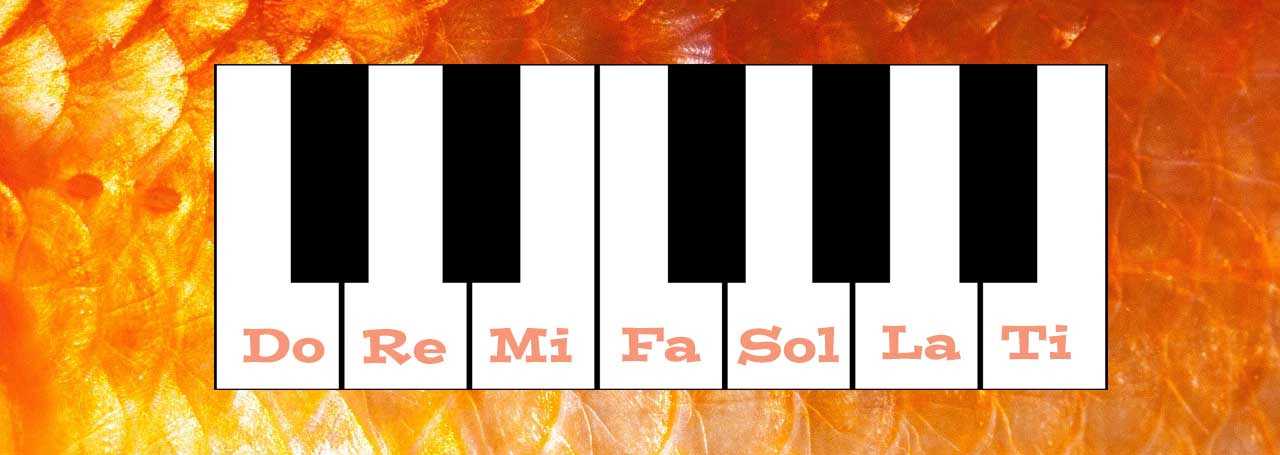
In many music theory books, scales are taught based on tetrachords which is an artificial mathematical construct very divorced from sound and music. I often liken tetrachord construction of scales to different ways to teach long division. Consequently, it never made much sense to me to teach scales, which should be based on how the notes sound in relation to each other via tetrachords. Now I teach scales aurally using solfege. Using solfege to sing scales has been a great improvement and my students seem to always be able to hear whether a scale sounds “right”. You could use numbers to sing scales rather than solfege, but solfege seems more musical to me plus you can use chromatic solfege to sing different types minor scales.

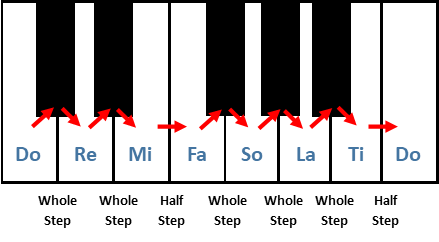
Another benefit to teaching scales using solfege is the simplicity of remembering that a major scale simply has a half-step between Mi -> Fa and Ti -> Do on the piano.

The following is an excerpt from my personal teaching book page introducing major scales:


Western Major Scales are composed of a certain sequence of steps. A major scale can start on any note at the piano. Different sequences of half steps and whole steps can create different types of scales.

If you sing a western major scale, it matches the following set of pitches:

Do—Re– Mi– Fa– So– La– Ti– Do

This sequence of sung pitches is called solfege. Solfege was made popular in the movie, “The Sound of Music” with the song, “Do—Re– Mi” by Richard Rodgers and Oscar Hammerstein II and sung by Julie Andrews.

If you sing your major scale using solfege, all the notes will be a whole step apart except for Mi– Fa and Ti—Do, which are half steps. Plus, it will always be a major scale if the sequence of whole steps and half steps are the same no matter which note is the starting pitch.


The next step when I teach scales is how to teach the varying fingering patterns. I typically insist that my students to know their scales from memory and not read the notes. This means that my students need to know some underlying fingering concepts and then memorize the keyboard topography of the individual scales. Knowing these principles will also help my students help my students figure out fingering patterns for themselves.

Underlying fingering concepts for scales:
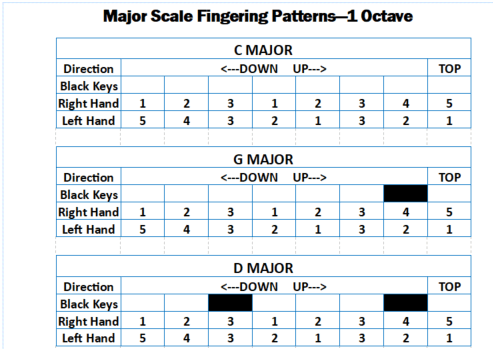
1. The first underlying fingering concept I teach is that we always try to keep the thumb on a white key whenever possible because it shifts the entire hand towards the fall board when the thumb is on a black key.
2. The second concept is that we typically use sequential groups of fingers when possible, like 1-2-3-4 and 1-2-3.

Scale keyboard topography:
Piano topography refers to the arrangement of the black and white piano keys and a pianist’s awareness of their location on the keyboard. It’s a key component of keyboard sense, which is the ability to play the piano fluently without relying on visual cues.
Definition courtesy of eNovative Piano

Several years ago I came across some images of scale fingering patterns where a dot above the finger number was used to indicate black keys. I found this scale topography image to be very compelling because that was how I typically envision scales inside my head. I then created my own version of this idea and use these scale fingering pages with my students instead of having them read the notes on a page. Here’s a sample of my current major scale fingering pattern teaching book page:

Although I haven’t created a similar page for fingering minor scales, I do like to teach minor scales using the same concepts with chromatic solfege. Chromatic solfege also really helps sing the difference between major and minor triads by simply singing the third note in the scale “Mi” and then the lower half step “Me”.

It can be handy to have scale-arpeggio reference books at times, so even though I like to teach scales without a book, I typically do make sure my students have a scale reference book. My current favorite scale reference books are: Alfred’s Basic Piano Library: The Complete Book of Scales, Chords, Arpeggios & Cadences or The Manual of Scales, Broken Chords and Arpeggios for Piano by ABRSM.

DawnTM Piano Teaching Book Pages:
DawnTM-Piano Introduction to major scales
DawnTM-Piano Major scale fingering patterns

References:
eNovativePiano. “Developing Keyboard Sense.” onlinepianocurriculum.enovativepiano.com. February 5th, 2021, https://onlinepianocurriculum.enovativepiano.com/developing-keyboard-sense/


Battles with Performance Anxiety

I have always been anxious about my piano performances. I can’t seem to shake the idea that “I’m not good enough” or “What will people think of me if I make a mistake”. I’m normally a calm person and I know I perform best when I am calm, but put me in front of an audience expecting a piano performance from me and the anxiety seeps in relentlessly, my thinking becomes disordered, and it is difficult to put myself in the right state of mind for me to play the piano well.

Over the years, I’ve had some successes and failures with my piano performance anxieties. Every once in a while, I play confidently and can tell the audience is “with me”, but those experiences are rare for me. I still love the piano and want to share my music with others. So, I keep trying and have developed some methods of dealing with performance anxiety that do indeed seem to help me, but they are not always guaranteed.

What works best for me

Understanding performance anxiety
There are very good performance anxiety books and courses available. I read and enjoyed “The Inner Game of Tennis by W. Timothy Gallwey” and also took a self-paced Performance Anxiety course from The Bulletproof Musician a number of years back. These resources helped me understand where my anxiety was coming from and helped me try quite a few different techniques with varying degrees of success with dealing with my performance anxiety. I especially liked the idea of the right and left brain functions and how to put yourself in the right brain hemisphere for performance.

Know your piece 200%
In the book “Piano Lessons” by Anna Goldsworthy (which is an ode to her teacher, Mrs. Sivan), Mrs. Sivan says, “It is not enough to understand, …must secure. And one hundred per cent security not enough. Onstage, must be two hundred per cent at least.” I’ve always loved this passage in the book. It was a great way to realize that when you are performing under pressure, it is not enough to simply be able to play your piece well in practice, you must know your piece so well, that it is difficult to play it badly. This idea is also expressed by the quote, “An amateur practices until he can do a thing right, a professional until he can’t do it wrong.” from “Psychology for Musicians” by Percy C. Buck.

Perform your piece under duress prior to an actual performance
My piano teacher always had me perform my exam pieces in local music teacher recitals prior to my AMEB exams. I do think performing your piece under similar conditions to an actual performance is helpful whenever possible. In my “Bulletproof Musician” course, there was also a recommendation to have someone do something extremely distracting when having a “dress rehearsal” in order to practice continuing to play despite distractions. In my own home practice, I like to do something to raise my pulse rate (like jumping jacks), then immediately try to sit down and perform my piece while I am still agitated to see if I can bring myself to focus properly.

Adjust your attitude – Anxiety is good for you
My piano teacher always used to tell me that “nerves can help you play your best”. I love this idea that anxiety can help you to focus well, it doesn’t have to be a detriment to performance. I often try to build this attitude into my psyche whenever possible.

Don’t let stress build up prior to performance
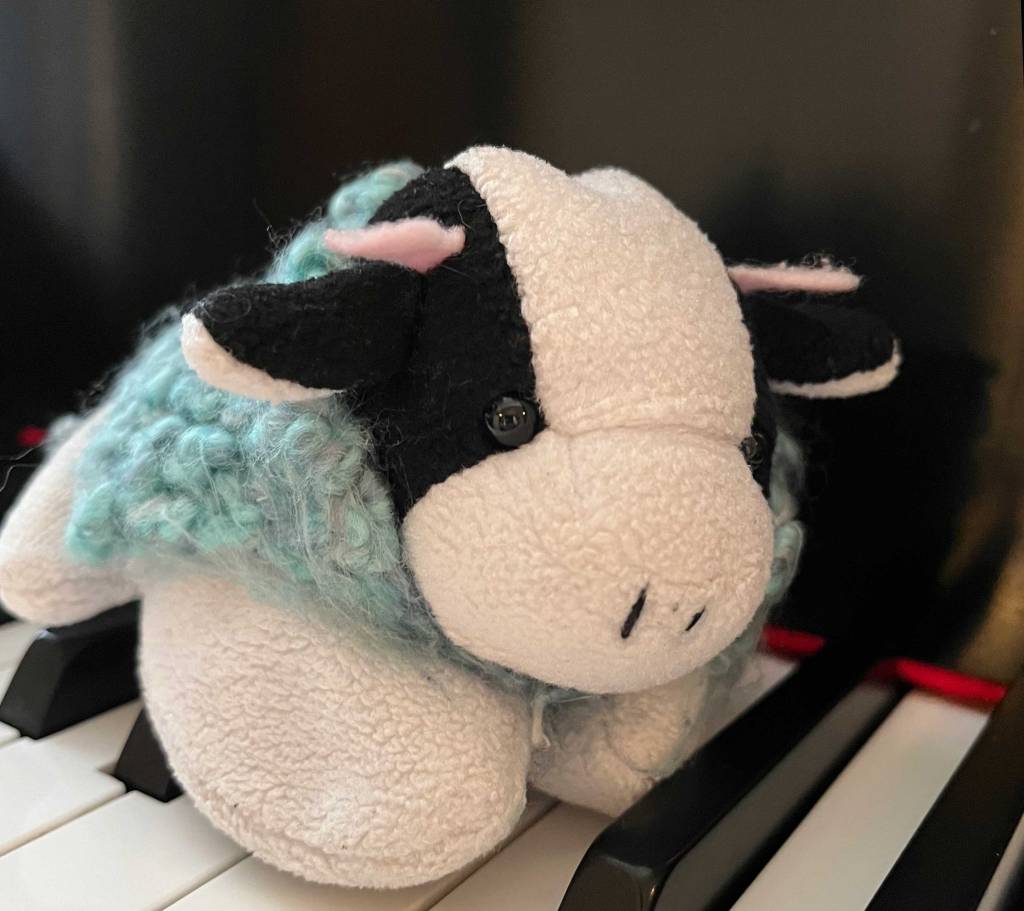
One of the most deadly problems with performance anxiety for me is waiting to perform and having anxiety build up to the point where I will be literally shaking as I perform (usually I have leg shakes). I used to have a piano friend who would jump around prior to a performance to release anxiety, but I tried that once and it didn’t work for me, it just made me more agitated. For me, the most effective method is to keep my mind occupied somehow to prevent the buildup of anxiety. When I have to wait prior to a performance in an audience, I like to use a mindfulness coloring book. I can then do intricate coloring during my wait which distracts me from my own sabotaging thoughts. Another method that helps me is my “comfort cow”. I went into my daughter’s old stuffed animal bin and pulled out a beanbag cow (with a decorative cape made by my daughter). It’s a little silly, but I like it. When I perform at a church service as the pianist, I knead my “comfort cow” as a fidgeting device between songs to release tension while waiting to play.

Breathe and Center
I understand that it can be good to have a routine for when you sit down to perform and that breathing is very important. When I sit down to perform, I always try to breathe and center. I also practice breathing and centering during my home performance practice. I have had mixed results with this technique because when I’m very anxious, it affects my ability to breathe and center. However, I do still like this technique and think it is useful.

Sing the melody in your head while you play during practice, then sing your way into your piece after centering
I love this technique even though it requires a lot of effort. I had one exam piece where I was very good about always singing the piece in my head during my practice. When I went to play this piece for my exam, I couldn’t help but keep singing the piece in my head and I performed the piece very well. Even if I don’t always sing my pieces constantly during my practice, I do always try to sing the beginning of my piece in my head prior to starting my performance as it helps me get the tempo, dynamics, and mood of the piece correct from the beginning.

Let go of mistakes
This is a really valuable lesson. It is pretty easy to make a mistake and then dwell on it and have it snowball into more and more errors. Thinking about your mistakes means that you are not thinking about the music or how to perform, you are just thinking of your own emotional misery. During my performance practice, I always try to “let go” of my mistakes and bring myself back to the music. This idea of letting go is also one of my favorite affirmations.

Affirmations
One of the best ideas I ever came up with to help me with performance anxiety is the use of affirmations. With these affirmations, I try to build up my own confidence in myself and my abilities. I do my best to make the affirmations positive sounding and then write my affirmations on 3×5 inch cards. I review my affirmation cards often and say the words out loud. These affirmations are not static, I modify my affirmations constantly depending on what I think works best. Here are some of my current affirmations:

  • I CAN play all the right notes.
  • When my mind wanders, I bring myself back to the music.
  • My music makes people feel good.
  • I aim for excellence, not perfection.
  • I always perform with confidence. I am a good pianist and I can do this.
  • I always focus on the music when performing.

Favorite Online Sheet Music Websites

I have such a huge library of music already, why do I keep acquiring new music? Well, because I love new music and because my students often want to play a particular piece at a particular level. So this post contains some of my favorite sources for sheet music.

Free sheet music is great, but there is good free and bad free sheet music. The good kind of free music is music that is either out of copyright and in the public domain or has a type of copyright where people can legally print off the music for their own use. The bad kind of free music is stuff that has been posted online by random people who have transcribed or scanned the music without permission from the copyright owner. The Music Teacher National Association has a great information page on music copyright.

IMSLP – The ultimate goal of the IMSLP is to gather all public domain music scores in addition to the music scores of all contemporary composers (or their estates) who wish to release them to the public free of charge. However, another main goal of IMSLP is to facilitate the exchange of musical ideas outside of compositions: for example, the analysis of a particular piece of music. IMSLP uses a Creative Commons License. Typically the music scores available on IMSLP are scans of old out of copyright editions of music, so you do need to be careful in case the edition is careless in terms of editing.

Mutopia– The Mutopia Project offers sheet music editions of classical music for free download. These beautifully clean copies are based on editions in the public domain, but a team of volunteers typesets the music using LilyPond software, so it is typically easier to read than the IMSLP scans.  Mutopia also offers some number of modern editions, arrangements and new music where the respective editors, arrangers and composers have chosen to make these works freely available. Most of the music is distributed under Creative Commons licenses.

Musescore – Musescore.org is a composing software (which I use and love). It is an open source desktop software application that supports more than 50 languages and is available for PC, Macintosh and Linux. Musescore.com is a sheet music platform. Previously anyone could create a free account and upload their music, to share with the world or to be kept as a private backup. However, musescore.com has gone to a subscription based model for sheet music and has a number of different pricing plans at this time. I don’t typically use musescore for sheet music anymore, but I love their composing software.

Sometimes the music you want is definitely not out of copyright. For instance, at one point I decided that I wanted to play the theme from the HBO show, “Game of Thrones”. So, I went to the ubiquitous  Sheetmusicplus.com. Sheetmusicplus is a great online music store that has almost everything you can want (and you can get a discount as a piano teacher). Previously, the main downside was that the website was rather “klunky” and the search function wasn’t very good. However, the website has been re-designed, so it might be a bit better now. I have ordered quite a lot of music from them over the years. Something nice that they’ve done relatively recently is the Digital Interactive Download, so you can download individual pieces instead of bound books.

Musicnotes is a great website when you want to find a particular piece. They are partnered with tons of companies and arrangers, so they have a large inventory of legitimate sheet music. All the music can be downloaded directly upon purchase, so you don’t have to wait, and usually the computer will play the first page for you, so you can hear how the arrangement is going to sound. They do try to “get” you for an extra charge to download a pdf, but I just print straight to pdf, so that’s a fee I avoid. Some of the arrangements are definitely better than others, so its worth your while to look over the arrangement choices carefully. MTNA and NAfME are corporate partners, so they are definitely legit. I probably buy most of my individual sheet music pieces from Musicnotes. I get a slight music teacher discount.

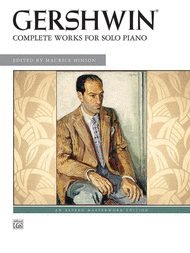
I still like books and books are a cheaper way to go for music if you like the composer and will purchase more than one piece. For instance, I paid about $7.00 (with tax) for my digital download of an arrangement of Summertime by Gershwin at Musicnotes. I could have purchased Gershwin’s Complete works for Solo Piano edited by Maurice Hinson for around $20.00 on Amazon. (Although, supporting your local music store is a nicer idea than ordering on Amazon.) Unfortunately for me, Summertime isn’t actually one of Gershwin’s piano works (it comes from the Porgy and Bess Opera), so I needed a piano arrangement. In this case, Musicnotes was handy because I was able to find a wonderful Phillip Keveren arrangement there.

Folk Songs are another great source of non-copyrighted music for piano students and teachers. Songs like London Bridge, Hot Cross Buns, Greensleeves etc. can be used by students for arranging their own music or can be arranged by a teacher for use by a student. And don’t forget all the Christmas carols… many of our favorite Christmas Carols are very old songs and well out of copyright.

There are other great sources for sheet music out there. I have used sites like sheetmusicnow.com and sheetmusicdirect.com on occasion. Sometimes I go to music publisher websites, like Hal Leonard or Alfred to buy particular books because they publish a lot of books meant for music teachers and sometimes I have a discount coupon code. Another resource I use a lot for my beginning adult students is Wendy Steven’s music at ComposeCreate.com. I am especially appreciative that I can get a studio license for her music, which allows me to use the music for more than one student.

If I like a particular artist, then sometimes I try to go directly to their website to buy their music. Not all active composers sell their own sheet music, but I wish they would! I’m currently working on a lovely piece by composer, Conner Chee, and was happy to see that I could buy his music in book form directly from his website.

My National Certificate of Teaching Music

I belong to the Music Teacher National Association which is an American professional association of music teachers whose mission is to advance the value of music study and music making in society and to support the professionalism of music teachers. MTNA has a membership that includes 73% independent teachers, 14% college or university instructors, 5% students, and 8% Commercial Studio Instructor, Public or Private Teacher, Other. Membership in MTNA also includes membership in the appropriate state state association and local association. This means I am also a member of the Washington State Music Teacher Association and my home Edmonds Music Teacher Association.

Members of MTNA can apply for a National Certificate of Teaching Music which allows members like me, who may no longer desire to go back to University for a music degree to receive a well-recognized music teaching credential and put the letters, NCTM, after my name in music teaching circles. I really appreciate that MTNA offers this sort credential for those of us who come to music teaching after a long journey.

The certification program is based upon a set of five standards (called projects) defining what a competent music teacher should know and be able to do. Upon fulfillment of the standards, applicants are granted the MTNA Professional Certification credential with the designation, Nationally Certified Teacher of Music (NCTM). In my case, my final NCTM submittal describing my teaching and studio was 66 written pages plus videos.

The first project was to write my teaching philosophy and a short essay on an additional music teaching topic, like developing a healthy technique, musical skills, expressive performance skills, etc. I have written my teaching philosophy many times as it tends to evolve over time, so this project wasn’t too bad for me. I had also thought previously on the topic of technique, so gathering my thoughts to answer that question wasn’t too onerous.

The second project was to analyze four teaching pieces from the four main style periods of Baroque, Classical, Romantic, and Contemporary. There are six questions about each piece and the answers need to be between 150-300 words. You don’t receive the names of the pieces until after you register, so you can’t prepare prior to registering. This was one of the most intensive projects for me and I had my bibliography/resource books strewn throughout my office while I was writing for this project, especially when I needed to discuss historically and stylistically appropriate interpretations of the pieces as well as information about the musical era characteristics and the specific composer.

The third project is to present your teaching and your personal performance. This was the other very intensive project for me. It included videos of me working with a student on a specific piece with written lesson outlines, self-evaluations, student goals, etc. Finding an appropriate adult piano student was difficult for me because adult students are very individual in their choice of music, how they practice, and how they learn. Also, many of my adult students are quite shy of the camera, so it took quite some time for me to find the right student. As for my personal performance, the most difficult part was that the piece had to be chosen from Level 7 or above in The Pianist’s Guide to Standard Teaching and Performance Literature by Jane Magrath. I play a lot of repertoire that isn’t listed in this guide, however, some of the pieces I played previously as part of my Australian Music Education Board levels were listed in the Magrath book, which was helpful. This project also included documenting outcomes of your teaching, so I submitted videos of my students playing at EMTA events, progress reports, and student conference outlines.

The fourth project was to share information about my teaching environment. This project was the most fun for me as I was able to share photos of my studio and include information about my personal teaching resources.

The fifth project was to discuss my studio business ethics and policies. This project was also pretty reasonable for me. I already have my studio policies listed on my website and pay my taxes every year, so coming up with my budget was pretty easy.

The bibliography was the third most intensive hurdle for me as I hadn’t cited sources in quite some time and figuring out how to cite sources accurately with web resources as well as books and magazines was tedious. However, I finally got my 7 pages of resources in order. After a period of review by myself and some helpful EMTA colleagues, Voilà, I was able to upload my NCTM paper for submission.

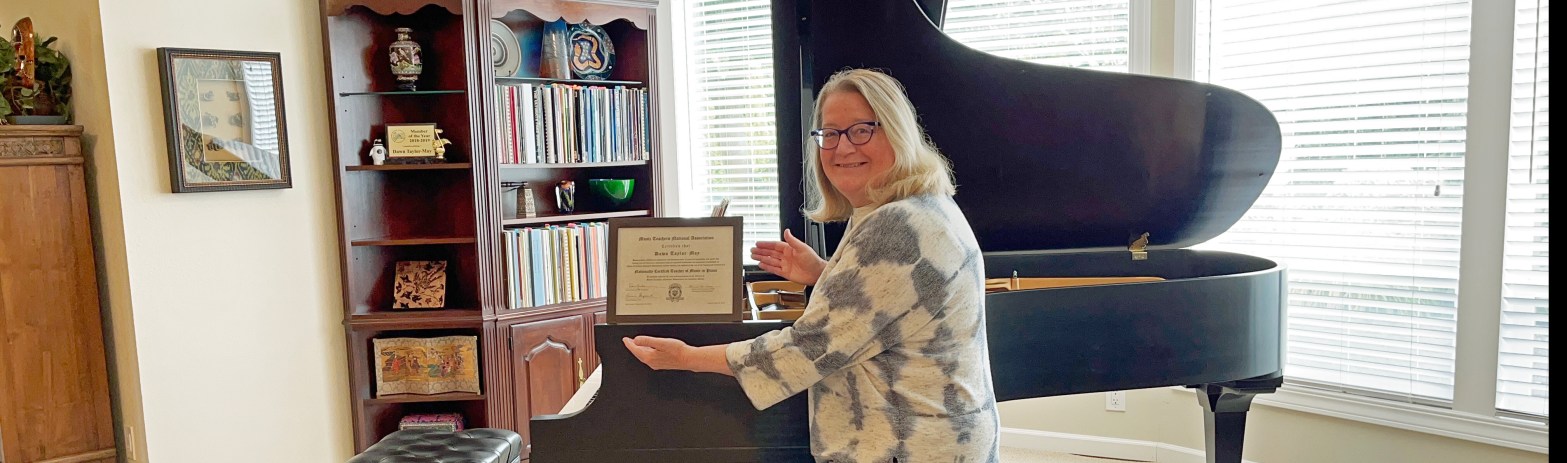
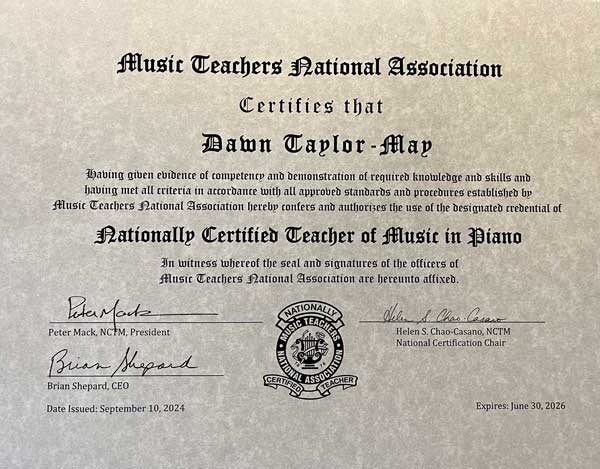
MTNA said it would take between 6-8 weeks to review my certification paper, but it only took a month for me to hear that my application had been approved. Now, I own a fancy certificate and can put NCTM after my name. I shared the email approval notification with my family, former piano and pedagogy teachers, and fellow members of EMTA immediately. After I received the paper certificate in the mail, I had it framed and put on my studio bookshelf. It makes me happy to see it there.

I like the neat signatures of the MTNA officials, it was like they actually took some time to sign their names.

Rainbow Figures for Piano

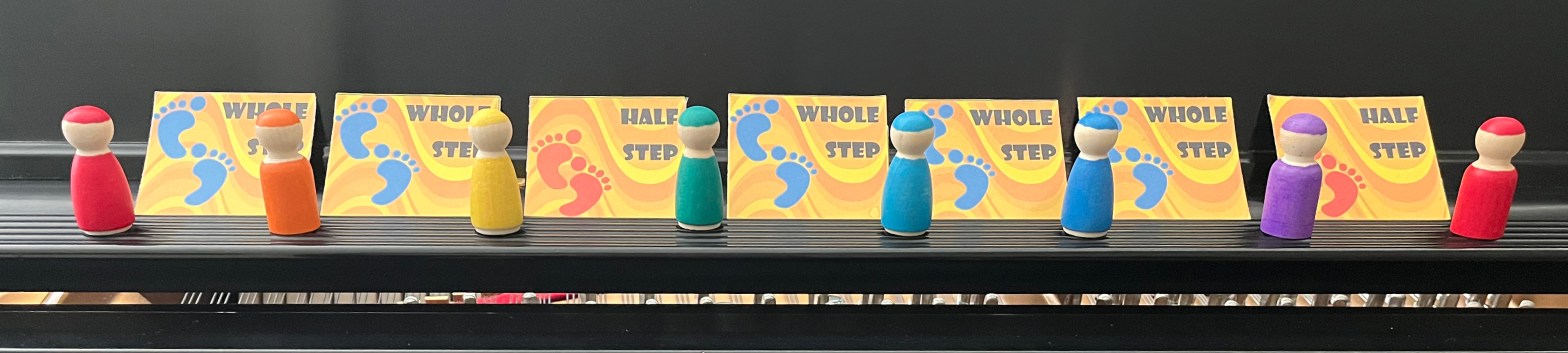
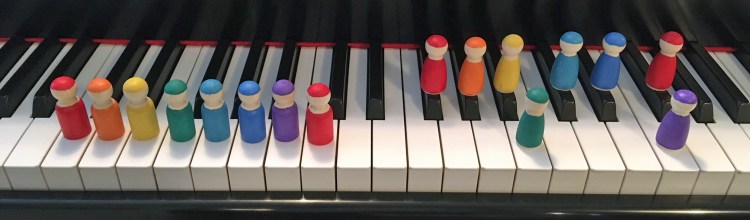
I’ve been using Grimm’s Rainbow figures for explaining scales to my piano students for years. I loved that these figures come in the seven colors of the rainbow which typically matches the number of different scale tones in Western Music. I like that the figures don’t have faces and can be configured to represent many different types of scales. For instance, I like to count half steps and whole steps using the figures to create both minor and major scales and sometimes even whole note and mixolydian scales. And because Newton chose the original seven rainbow colors based in part on his understanding of music, I also like to arrange the figures in light wavelength order (rainbow color order) with the longest light wavelength (red) being the tonic. That way it matches the longest light wavelength with the lowest and longest sound wavelength in a scale (because sound wavelengths get shorter with higher tones). It is kind of fun to inject a little science into the piano lessons!

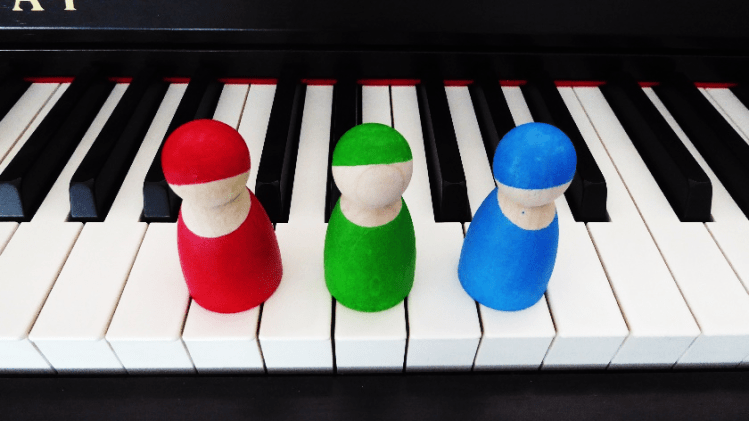
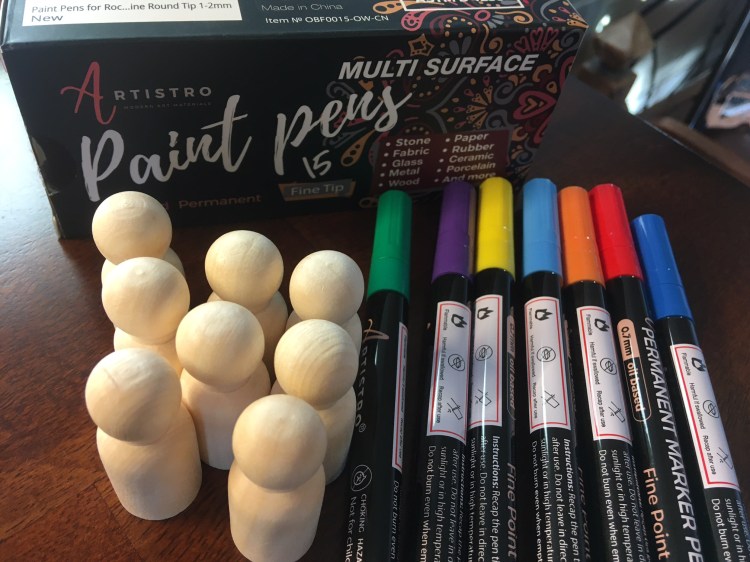
However, these figures have a slightly larger diameter than I would like and they take up more than one white piano key width and they have trouble balancing on a black keys. So, I ordered a batch of smaller plain wooden peg dolls and colored them myself using paint pens. The new peg dolls have a smaller dimension and will fit on my piano keys much better (plus they are a lot cheaper than the Grimm’s Rainbow figures).

Materials for making your own rainbow figures:
Plain wooden peg dolls
Paint Pens

The wooden peg dolls I ordered came in a box of 50 with various sizes, so I’m able to make multiple sets of rainbow figures at different sizes. I also looked to make sure that the paint pens I selected had the official 7 colors of the rainbow. I needed red, orange, yellow, green, blue (light blue), indigo (dark blue), and violet (purple). It didn’t take me too long to make these figures once I had the supplies, but it did require a steady hand.

So, these are my current rainbow scale figures and they fit on my piano keys so much better. 

Here are some some suggestions for ways to use Rainbow Scale Figures for scales:

1. Talk about the tonic or home of your scale with the red rainbow figure. Mention that the home of any scale can be any note on the piano and discuss what makes that note the “home” of a piece of music.

2. Arrange your rainbow scale friends in rainbow color order. I always have two red color figures so that we can talk about octaves (double the frequency – double the fun).

3. I like to talk about scales tones have a lot of different names.

* 1, 2, 3, 4, 5, 6, 7, 8

* Tonic, Supertonic, Mediant, Subdominant, Dominant, Submediant, Leading Tone, Tonic

* Do, Re, Mi, Fa, So, La, Ti, Do

* Major Scale – half steps and whole steps

3. Introduce the minor scales

* Minor Scales – half steps and whole steps

* Solfege the minor scale as appropriate: Do Di/Ra Re Ri/Me Mi Fa Fi/Se Sol Si/Le La Li/Te Ti Do

4. Create the different scale modes by moving around the half steps and whole steps.

5. Whole note scales

6. Pentatonic and Blues Scales

It is also great to use your rainbow scale figures for intervals and chords:

1. Create a scale using intervals. 2nd, 3rd, etc.

2. Create a scale and then start to remove figures to create chords. I really like doing this because it helps students visualize how scales help you to create chords.

3. Invert chords by moving the figures around.

Finally, I like my rainbow scale figures because they fit well into my multi-sensory learning approach. They are a different sort of scale visual, tactile if the students place the figures on the keys, and aural if you use solfege.

Famous Song Introductions for Fun and Technique

I recently had a student where I was struggling to find approachable and appealing material. The student always wanted to work on pieces that were above their technical ability, so they typically spent a very long time (too long) on each piece. Method books had shorter and easier songs, but were unappealing to this young adult. I needed to find some shorter and more appealing material for this student. Then, I stumbled across a number of YouTube videos where the someone would simply play immediately recognizable pop song introductions on the piano one after another as one video. This is one example by Paul Fagan:

What a great idea! Have my student learn short very recognizable introductions to songs as a stand alone activity. This idea has worked well not only with this student, but most of my other adult students as well and become a standard teaching technique in my studio. My students love working on the short introductions of famous songs and it gives me a chance to have my student work with various keys, talk about harmonies, and what makes the introduction interesting. However, most importantly, I’ve found that I can teach my students a lot about technique all while working on very appealing music that is quite a bit shorter than learning an entire piece. I have recently added other genres like classical music for variety.

My approach to using song introductions in piano lessons

1. Figure out a famous song that has a nice piano introduction or could be a nice piano introduction.
2. Analyze the introduction and look for salient teaching points about the introduction.
3. Write out the song introduction using music notation software so the student doesn’t get bogged down by the entire song. I sometimes cater to the individual student by simplifying the piano arrangement, adding in fingering, etc. I also usually put a cadence at the end of the intro, so it sounds more complete. These introductions are usually between 4 and 8 bars long.
4. I write down teaching points for my records.

Classical song Introduction Examples

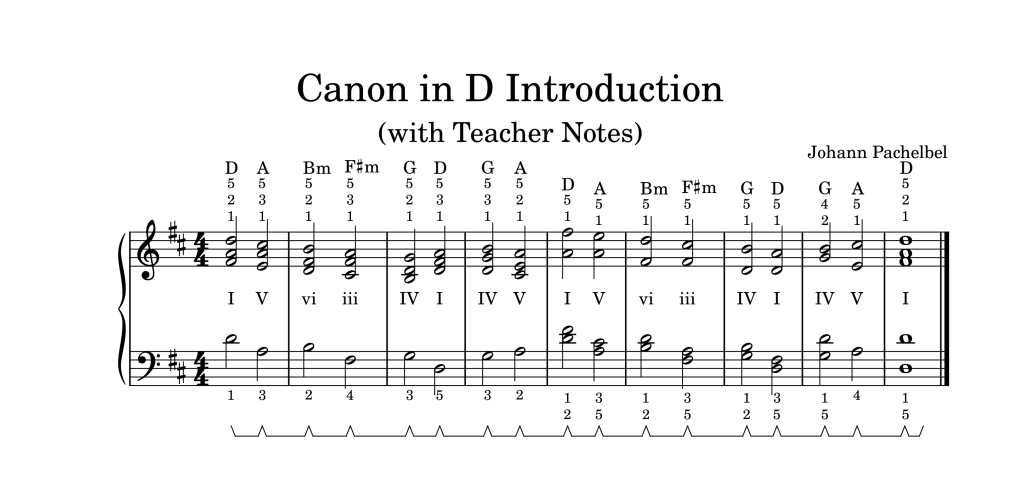
Pachelbel Canon in D

Background: Pachelbel’s Canon by the German Baroque composer Johann Pachelbel. Neither the date nor the circumstances of its composition are known (suggested dates range from 1680 to 1706). This piece fell into obscurity for many centuries until a 1968 arrangement and recording of it by the Jean-François Paillard chamber orchestra gained attention. From the 1970s onward, elements of the piece, especially its chord progression, were used in a variety of pop songs. Since the 1980s, it has also found increasingly common use in weddings and funeral ceremonies in the Western world.

Student Questions:
1. What key is this?
2. What are the chords (both pop and classical notation) used and what inversion are they?
3. Where is the well-known melody? How can you bring out the melody?
4, What fingering should be used and why?
5. Pedaling, how should this be pedaled and why?

Teacher Notes:
1. Good for pedaling practice.
2. Good for chord voicing.
3. Good for practicing sounding all chord notes at once, avoiding “splitting” of notes.
4. Good for figuring out chord fingering.
5. Good for figuring out chords within a key and cadences.

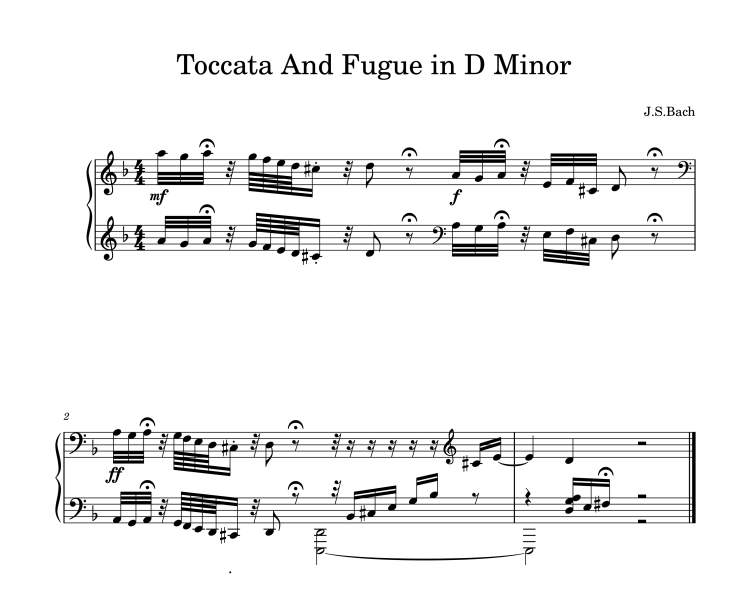
Bach Toccata and Fugue in D Minor

Background: The Toccata and Fugue in D minor, BWV 565, is a composition for organ by Johann Sebastian Bach. Little is known about its early existence until the piece was discovered in an undated manuscript produced by Johannes Ringk. It was first published in 1833 during the early Bach Revival period through the efforts of composer Felix Mendelssohn. BWV 565 was used as film music well before the sound film era, becoming a cliché to illustrate horror and villainy.

Student Questions:
1. How should we finger this and why?
2. What do you visualize when you hear this opening?
3. This looks hard to read, how should we count this out? Where are the four beats in the measures?
4. Notice the change in clef and also all types of repetition of the opening motif.

Teacher Notes:
1. Good for figuring out unusual note timings.
2. Good for short fast scalar runs with articulation.
3. Notice that each short run ends on a “D”, establishing the key.
4. The last arpeggio is mostly a diminished arpeggio resolving once to a D Major chord instead of minor.
5. Fun to play this on a digital piano using the organ mode.

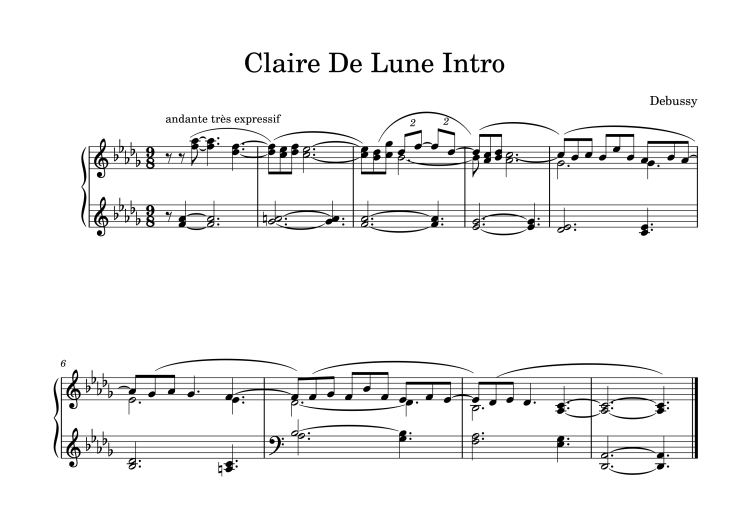
Debussy Clair De Lune

Background: The French composer, Claude Debussy began composing Clair de lune in 1890 when he was 28 and later revised and published it as the 3rd movement of the four-movement work called Suite Bergamasque. ‘Clair de lune’ (translates as Moonlight) takes its title from an atmospheric poem by the French poet Paul Verlaine which depicts the soul as somewhere full of music ‘in a minor key’ where birds are inspired to sing by the ‘sad and beautiful’ light of the moon.

Student Questions:
1. What key is this?
2. What does “andante très expressif” mean?
3. How do you think the duplets are played in 9/8 time?
4. How shall we finger this so you can move easily from chord to chord and note to note?
5. Debussy uses very interesting chords that can be difficult to analyze. Discuss the harmonization.
6. What image comes to mind when you hear this intro?
7. What sort of technique can you use to make this piece sound like ‘Moonlight”?

Teacher Notes:
1. Introduces unusual time signature.
2. Needs a little rubato because if you play it exactly as written, it sounds a bit awkward.
3. Need to be careful with fingering so the student can keep the legato sound.
4. Discuss phrasing, drop-rolls, moving toward the ending note.
5. Discuss dropping into the LH chords to make them sound soft and gentle, plus hand balance.
6. Check this piece with the metronome to get correct timing and then add rubato.
7. Practice without the pedal to get a solid legato that doesn’t rely on the pedal alone.

Some Favorite Pop Song Introductions

The Fray How To Save A Life
MusicNotes.com sheet music
Teacher Notes:
1. Beginner level
2. Discuss chords used and key.
2. Discuss LH similarity to alberti bass, how is this different?
3. Good for holding down one finger and playing notes with other fingers.

John Lennon Imagine
MusicNotes.com sheet music
Teacher Notes:
1. Beginner level
2. Discuss chords used and key.
3. LH Bass pedal point on “C”.
4. Discuss RH similarity to classical decorations like turns and appoggiaturas.

Coldplay Clocks
MusicNotes.com sheet music
Teacher Notes:
1. Advanced Beginner level
2. Discuss key and scale. Why is the starting chord E flat, but the key signature is A flat? Introduce mixolydian scale.
3. Discuss the grouping of RH notes and how it has a 3-3-2 feel despite being in 4/4 time.
4. Discuss chord inversions.

Adele Turning Tables
MusicNotes.com sheet music
Teacher Notes:
1. Intermediate level
2. Good for timing of LH and good for teaching that a dotted eighth note receives 3/4 of a beat.
2. Chords are more sophisticated, but can be a good introduction to sus and 9th chords.
3. RH consists of broken chords.
4. Can help teach coordination between the RH and LH.

Journey Don’t Stop Believing
MusicNotes.com sheet music
Teacher Notes:
1. Intermediate level
2. Good for teaching RH rotation to reach the broken chord easily, use of pedal point in RH.
3. Good for teaching hand balance, because melody is in LH.
4. Difficult to get the LH timing to go with the RH broken chord for students, need to count or play with metronome.